
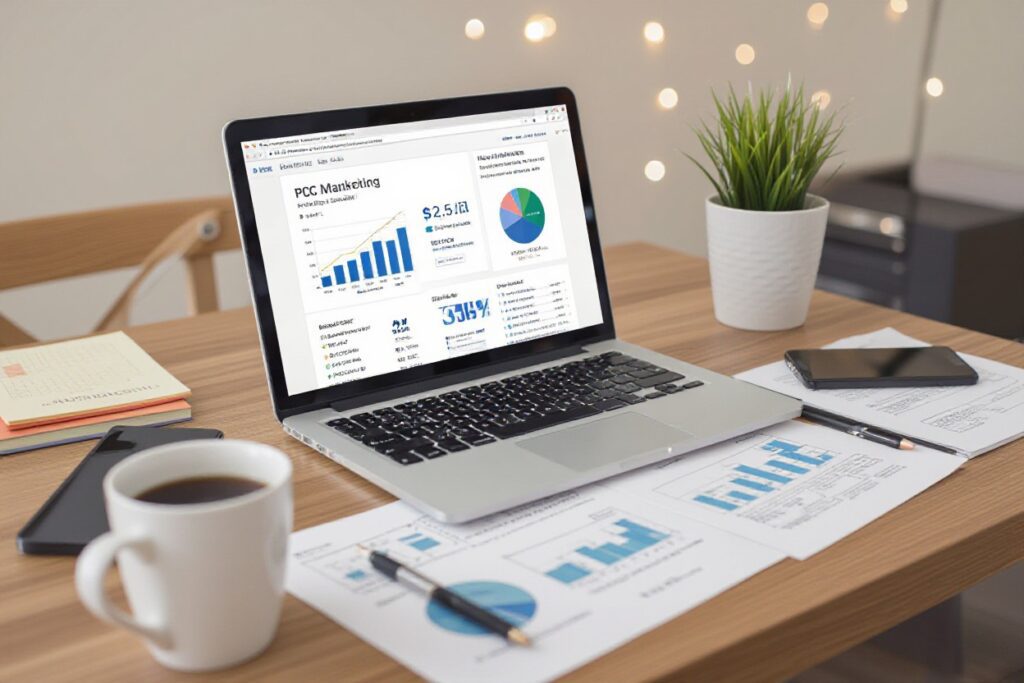
You might be wondering what PPC stands for in digital marketing; I explain that PPC means Pay-Per-Click, an advertising model where you pay each time a user clicks your ad, and I outline how bidding, ad relevance, and quality score affect cost and performance so you can optimize campaigns, measure ROI, and target audiences effectively with search, display, and social ads.
Key Takeaways:
- PPC stands for Pay-Per-Click, an online advertising model where advertisers pay each time a user clicks their ad.
- Used on platforms like Google Ads and Microsoft Advertising, it relies on keywords, bidding, and ad auctions to target relevant users.
- PPC delivers immediate, measurable traffic and ROI through metrics such as CTR, CPC, conversion rate, and CPA.
What is PPC?
Definition of PPC
PPC (pay-per-click) is an ad model where I bid on keywords and you pay only when someone clicks your ad. Platforms like Google Ads and Microsoft Ads run real-time auctions, with average CPCs varying from cents to several dollars by industry. I measure impressions, CTR, cost-per-click, and conversions, and use conversion tracking plus landing page A/B tests to turn paid clicks into measurable leads or sales.
Importance in Digital Marketing
PPC delivers immediate search visibility and highly specific targeting—location, device, time, and audience segments—so you capture intent-driven traffic. I rely on it for fast customer acquisition because you can see CPC, conversion rate, and ROAS live; typical search conversion rates are often in the 3–5% range, making PPC an efficient complement to longer-term SEO efforts.
For example, I ran a campaign with a $2,000 monthly budget and $1.50 average CPC, yielding ~1,333 clicks; at a 4% conversion rate that produced about 53 sales and a 3x ROAS after optimization. You can scale by improving Quality Score, testing ad copy and landing pages, and using remarketing—changes that commonly cut acquisition costs 20–40% within weeks.

How PPC Works
When I launch a PPC campaign I pick keywords, set budgets and bids, then engines match queries to ads and charge per click. You see results quickly: search ads often deliver CTRs around 3–5% on average, while conversion rates vary by industry—retail 2–4%, B2B 1–3%. I monitor spend, adjust targeting, and optimize creatives to lower cost per acquisition and improve ROI within weeks.
Bidding Process
I choose between manual CPC, target CPA, target ROAS or maximize clicks and set a max bid; for example I might cap CPC at $2 with a $100 daily budget. Automated bidding uses historical data to raise bids for high-value searches, often increasing conversion rates by 10–30% in tests. You can also apply device, location and time adjustments to push more spend where performance is strongest.
Ad Auctions
Ad auctions rank ads by Ad Rank, which multiplies your bid by Quality Score (1–10) and includes expected CTR, relevance and landing page quality. I watch Ad Rank because your actual CPC equals (Ad Rank of the advertiser below you ÷ your Quality Score) + $0.01; for instance if the next Ad Rank is 150 and your Quality Score is 8, the paid CPC is 150 ÷ 8 + $0.01 ≈ $18.76.
Beyond that I optimize ad extensions, relevance and landing pages since they influence Ad Rank and ad eligibility. You can track Impression Share and Lost IS to see missed opportunities; low budgets or bids often cause the bulk of lost impressions. Smart Bidding leverages signals like device, location and time to bid dynamically, and testing creative variations alongside bid strategies usually yields the best cost per conversion.
Types of PPC Advertising
| Search Ads | Intent-driven listings on search engines (Google Ads, Bing); average CTR around 3% and CPC varies by industry (finance often >$3, retail ~$0.5–$1.5). |
| Display Ads | Visual banners across the Google Display Network and programmatic exchanges; reaches ~90% of internet users, typical CTR ~0.4–0.6%. |
| Shopping Ads | Product listings with images and price on SERPs; high purchase intent and measurable ROAS for e-commerce catalogs. |
| Social Media Ads | Targeted ads on Facebook, Instagram, LinkedIn, TikTok; precise audience segments yield lower CPA for engagement-driven goals. |
| Video Ads | Skippable and non-skippable spots on YouTube and CTV; effective for brand lift and storytelling, CPMs vary widely by placement. |
- I prioritize search for intent capture and conversions.
- You can use display to build awareness and retarget visitors.
- I recommend shopping ads for catalog-driven revenue growth.
- You should test video for higher brand recall and storytelling.
- Recognizing the right mix depends on budget, funnel stage, and audience.
Search Ads
I rely on search ads to capture intent: when someone searches “buy running shoes near me” they convert at far higher rates. You can expect average CTRs near 2–4% on Google Search, with CPCs varying by niche; for example, personal finance keywords frequently exceed $3 per click while local retail often sits under $2. I use tight keyword match types, ad extensions, and bid adjustments by device to improve quality score and lower CPA.
Display Ads
I use display ads primarily for reach and remarketing: the Google Display Network reaches roughly 90% of internet users, delivering broad exposure at low CPMs. You’ll see CTRs under 1% typically, so I focus on viewable impressions, strong creative, and audience lists to drive incremental conversions rather than direct-response volume.
I often combine responsive display creatives with audience signals—custom intent, in-market segments, and existing site visitors—to boost efficiency. For example, pairing a 30% off creative with a 14-day cart abandoner audience lifted conversions by double digits in a recent retail test. I also A/B test static vs. HTML5 formats and prioritize placements with viewability above 50%.
Social Media Ads
I leverage social platforms for precise demographic and interest targeting: Facebook and Instagram work well for consumer retail with CPCs commonly between $0.50–$2, while LinkedIn costs more but delivers better B2B lead quality. You can use carousel, collection, and short video formats to increase engagement and feed prospects into your funnel with tailored offers.
Recognizing that platform choice affects both cost and intent, I split budgets by objective—awareness on TikTok and YouTube, consideration on Instagram, and conversion-focused campaigns on Facebook or LinkedIn—then optimize toward CPA or ROAS depending on your business goal.
Benefits of PPC
PPC delivers measurable, scalable outcomes that I use to drive immediate traffic and conversions. For example, with a $2,000 monthly budget I scaled an e-commerce client from 150 to 330 monthly orders in 60 days by testing ad copy and bid strategies. You get granular ROI data—impressions, CTR, cost per acquisition—so you can reallocate budget to campaigns that actually perform.
Immediate Results
Within hours of launching a campaign you can see impressions and clicks; I often spot trends the same day and adjust bids or creatives. For instance, a local service ad produced its first booked appointment six hours after going live. You benefit from real-time reporting in platforms like Google Ads and Microsoft Advertising, allowing rapid A/B testing and quick budget shifts to capitalize on demand.
Targeted Marketing
I can target users by intent, location, device, demographics and keywords, which concentrates spend on the people most likely to convert. For example, targeting “plumber near me” keywords and a 10-mile radius yielded a 7% conversion rate and $28 cost per lead for a client. You control who sees your ads, down to ZIP code and time of day, improving efficiency compared with broad display buys.
Using advanced features like remarketing lists, Customer Match and in-market audiences lets me re-engage visitors and find lookalike prospects; I increased returning-user conversions by 40% through RLSA adjustments. Additionally, negative keywords, exact match refinements and dayparting cut wasted spend, and you can combine audience signals with bid modifiers to prioritize high-value segments.
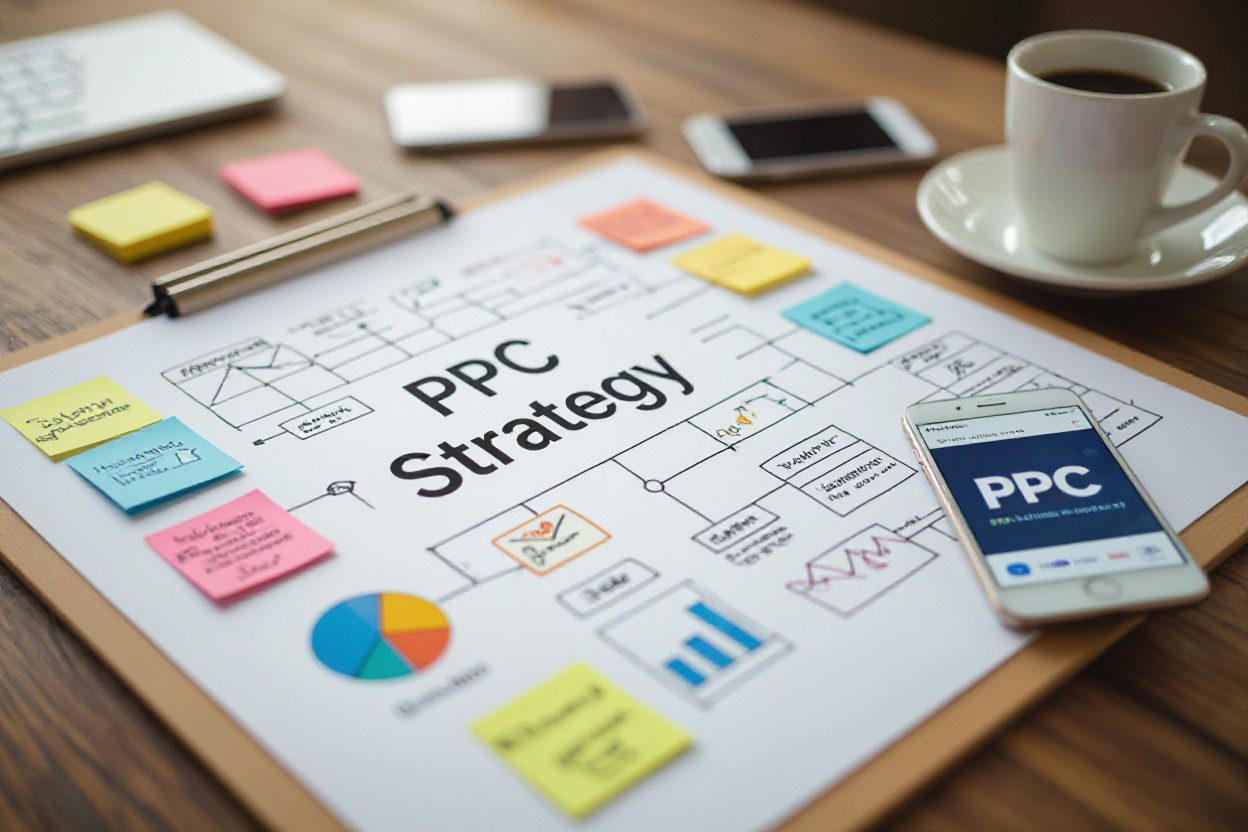
PPC Strategy Development
I map campaigns to funnel stages and set KPIs like CPC, CPA, and ROAS, then use historical data and A/B tests to allocate spend; for example, I shifted 40% of a fashion retailer’s budget to high-intent branded keywords and doubled ROAS from 2.1x to 4.3x in eight weeks, while maintaining CTR targets of 3–5% and conversion rates of 2–5% through weekly bid adjustments and monthly strategy reviews.
Keyword Research
I combine Keyword Planner, Ahrefs, and Search Console to mine seed and long-tail queries, prioritizing commercial intent and CPCs under $2 when feasible; long-tail terms often drive 30–40% of conversions despite lower volume. I segment by match type, add negatives weekly, and build tightly themed ad groups—this reduced wasted spend by 27% on a B2B account I managed.
Budgeting and Planning
I allocate budgets per campaign from historical CPA and growth targets, commonly using a 70/30 brand/non-brand split, scheduling higher bids during peak days and reserving about 15% of spend for experiments. I also set daily caps and automated rules to prevent overspend and reassign funds to top performers after 7–14 days of data.
I forecast budget with a simple formula: budget = target conversions × target CPA; for instance, 100 conversions at a $50 CPA requires $5,000. I then model traffic needs—at a 3% conversion rate you’d need ~3,333 clicks, and at $1.50 CPC that equals $5,000—run best/worst-case scenarios, reserve 10–20% for seasonality, and use portfolio bidding to shift spend toward campaigns meeting ROAS targets.
Measuring PPC Success
I focus on outcomes like return on ad spend (ROAS), cost per acquisition (CPA) and lifetime value to judge campaign health, aiming for a ROAS of at least 3:1 where feasible and watching conversion rates typically between 2–6% on search. I also use multi-touch attribution to avoid overvaluing last-click wins, and I refer clients to What Is PPC Marketing? for foundational context while plunging into granular metric analysis.
Key Performance Indicators (KPIs)
I track CTR, conversion rate (CVR), CPA, ROAS, impression share and quality score, setting targets by channel and funnel stage; for example, I aim for CTRs of 3–6% on branded search and CPAs of $20–$200 depending on industry. I segment KPIs by device, geography and audience, and I monitor trends weekly so I can reallocate budget or pause low-performing keywords within 48 hours when needed.
Tools for Analysis
I rely on Google Ads and Google Analytics 4 for core metrics, Looker Studio for executive dashboards, and Supermetrics to centralize data into BigQuery; SEMrush and Auction Insights fill competitive gaps. I pull impression share, conversion attribution windows and auction-level insights daily to spot anomalies and optimize bids.
In practice, I connect GA4 to Google Ads with imported conversions, use UTM tagging to tie paid clicks to on-site behavior, and build Looker Studio dashboards that refresh hourly. This setup enabled me to consolidate 12 campaigns into one dashboard and reduce blended CPA by 27% in a recent retail account by reallocating spend to high-ROAS keywords and adjusting bid strategies.
Final Words
On the whole I define PPC as Pay-Per-Click advertising in digital marketing; I advise you to view it as a measurable, bid-based way to drive targeted traffic, letting you control your budget, keywords and ROI. If you optimize campaigns and monitor performance, you can scale visibility and conversions efficiently.
FAQ
Q: What is the full form of PPC in digital marketing?
A: PPC stands for Pay-Per-Click. It is an online advertising model where advertisers pay a fee each time a user clicks their ad. PPC ads appear on search engines, social media, and partner sites; advertisers bid on keywords or audience segments, and platforms deliver ads based on bid, relevance, and targeting. PPC enables immediate visibility, precise targeting, measurable spend, and performance-driven traffic to landing pages or product listings.
Q: How does a PPC campaign work?
A: A PPC campaign begins with defining goals and selecting keywords or audiences. Advertisers create ad copy and set bids and budgets. When a user performs a relevant search or matches targeting criteria, an ad auction determines which ads show, using factors like bid amount and quality/relevance scores. If the ad is clicked, the advertiser is charged the cost-per-click (CPC). Conversion tracking measures actions after the click (sales, signups), and campaigns are optimized by adjusting bids, keywords, ad creative, and landing pages to improve performance and return on ad spend.
Q: What metrics and best practices should advertisers use for PPC?
A: Key metrics: click-through rate (CTR), cost-per-click (CPC), conversion rate, cost-per-acquisition (CPA), return on ad spend (ROAS), impression share, and quality score. Best practices: set clear campaign objectives; conduct thorough keyword and audience research; use match types and negative keywords to control traffic; write compelling, relevant ad copy; optimize landing pages for conversion and speed; implement tracking and attribution; test creatives and bids (A/B testing); use audience targeting and bid adjustments; monitor search terms and performance regularly to scale effective elements and pause underperforming ones.